Research → Technical Validation → Commercial Adoption Sodium-ion is beginning to move through exactly this transition in Europe. The market is beginning to see the disruptive potential Sodium-ion does not
Europe is moving from rewarding solar exports to rewarding self-consumption. For homes, businesses and grid-constrained sites, sodium-ion batteries can turn surplus solar power into lower electricity costs, greater energy autonomy
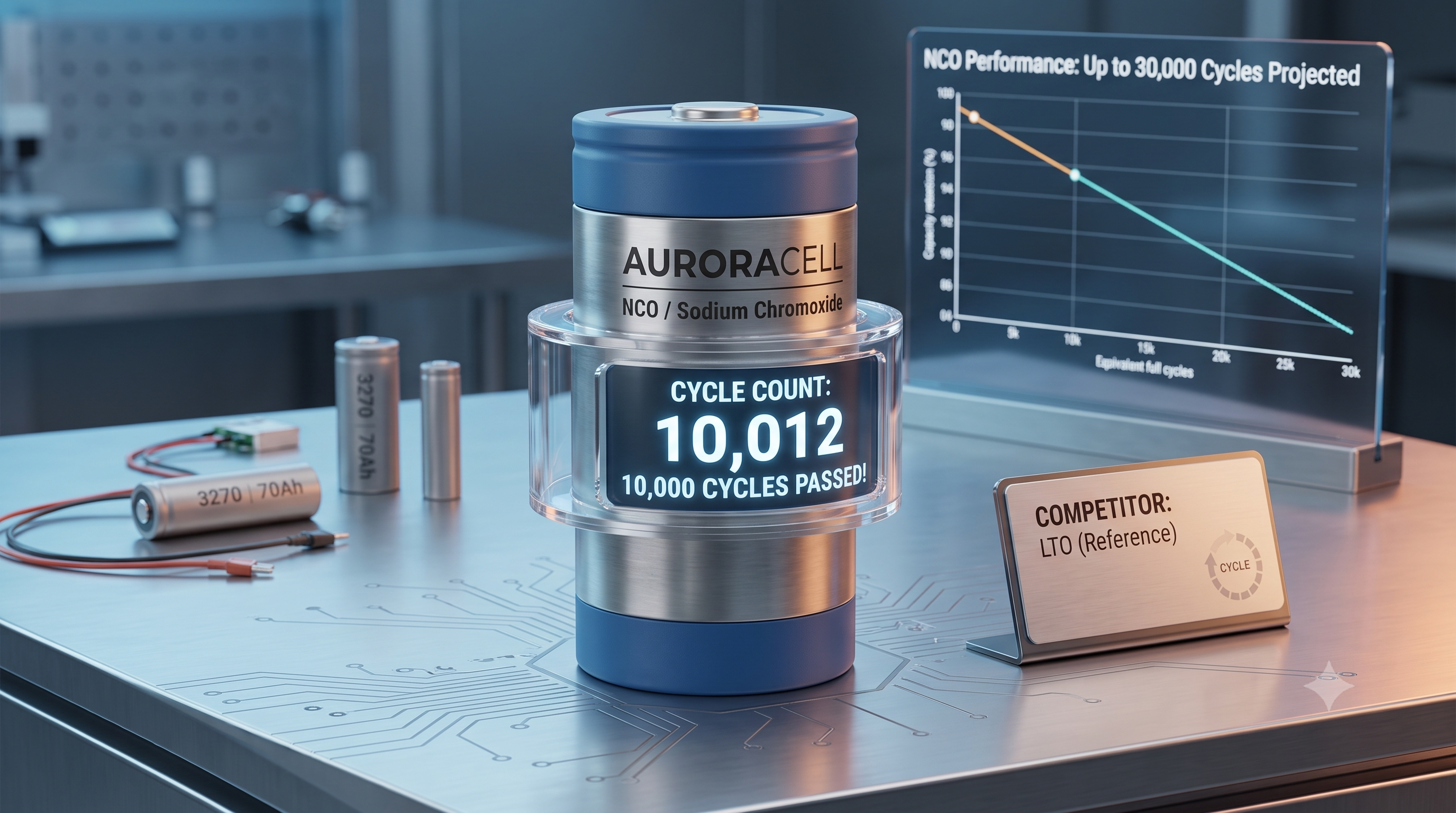
A few months ago, we shared that our cells were demonstrating unprecedented longevity in our aggressive 3C/3C “torture tests.” We didn’t stop there, and the latest data requires us to
AuroraCell is taking another important step toward making sodium-ion battery technology more accessible across Europe. In addition to our existing warehouse operations in Bulgaria, we are expanding our warehouse and
That is a fair question. Because the residential battery market is already full of big claims. “Long lifetime.”“Safe chemistry.”“High efficiency.”“Solar ready.”“Best-in-class storage.” But for homeowners, installers, and system integrators, the
That is a fair question. Because safety claims in the battery market are often made in broad terms. People talk about “safe chemistry,” “low propagation risk,” or “better thermal stability,”
When large solar plus storage projects are evaluated, the discussion often starts with one number: upfront CAPEX. That is understandable. A lower initial battery cost looks attractive on paper, especially
One of the most persistent rumors in the battery market is that sodium-ion cells suffer from poor round trip efficiency. It is a claim that gets repeated often, especially by